

 Having lived in Atlanta for nearly 30 years, I have been witness many times to the degrading attitude my original hometown of New York takes to this place.
Of course, it's the same attitude New York takes to every other place in America. It looks down at us. It assumes a right to define us, to buy and sell us, to treat us as its economic and cultural subjects.
New York does not know best. You have only to look at the fate of Turner Broadcasting in the hands of Time Warner to know that. CNN is crap. The company disinvested in The Cartoon Network, which had been successful, for short term gain. It's sad, and I know Ted Turner would agree.
Usually Atlanta falls meekly under the gaze of the Big Apple. At least white Atlanta does. Black Atlanta — that's something else. You don't see black rap or R&B artists kowtowing to their New York counterparts. They have succeeded in bringing a little power down here, and that's actually good for everyone, white and black.
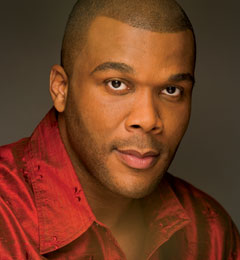
Something similar has finally happened in TV thanks to Tyler Perry. He came here less than 20 years ago from his birthplace of New Orleans, penniless. Now he's worth a great deal of money. He has built his own production studio on property formerly owned by Delta Airlines in southwest Atlanta.
 In his review of Tyler's career, called Mama's Gun, Hilton Als manages to both praise and dismiss this achievement, by looking down his nose at Perry's product.
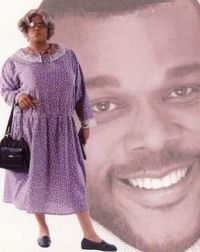
It's not for everyone. Perry is a conventional storyteller, who claims a deep Christian faith. Most of his stories are formulaic. Strong black mother protects the culture, young black woman gets real when she accepts her role of nurturing an imperfect black man, smart black man gets himself a good woman. Perry is best known for Madea, a self-created middle age matriarch he performs himself in drag.
In this, his work is little different from that of Boris Thomashefsky, whose Yiddish Theater was a godfather to what we now call Broadway. It's ethnic, speaking to a specific group ethic. It's relentlessly positive and upbeat.
Who can have a problem with that? I'm not in his target audience — I'm a 55 year old white guy from Long Island — but as a business reporter and amateur business historian I can still admire the guy. So should you.
Als' story hints that Perry has personal demons. So what? Walt Disney had demons. So did Daryl Zanuck. Rather than expecting him to be Tennesssee Williams (who had real demons), it might be more appropriate to compare him to these and other studio heads. Or to contemporary black entrepreneurs like Oprah Winfrey, who came to the opening of his new studio.
My neighbors need heroes. They need uplifting stories. They need to see people who live like them living middle class lives, even troubled ones, and finding a way to break through. They need it as badly as Thomashefsky's audience did, and for a similar reason.
Because for many of my neighbors, even modest success is a pretty new deal. Some of my neighbors still remember a day when black folks couldn't live on the street where I live. Anything that delivers traditions, that delivers values, and that demonstrates success through hard work is to be celebrated and embraced, not dissed.
 The most important thing to realize about Tyler Perry is he is still in the middle of his career. At age 40 Disney, Zanuck and even Winfrey had their best days in front of them. Perry has within his power the hiring and nurturing of many, many good writers, directors, producers and actors from within this community, and transforming the neighborhood he has chosen to make his home.
His failure would be a tragedy. But I think it's foolish to, as Als has, to either root for it or expect it. Not every Atlantan is a sell-out intimidated by New York's power and wealth.



Yes. Tyler Perry is the direct heir and successor to the ethnic family comedies of the 30s and 40s, in whatever media: radio, movies, and short strories in print. Most of those were Jewish (The Goldbergs, Abie’s Irish Rose), some Irish (Fibber McGee’s Closet) but also included were Backwoods Americans like Ma & Pa Kettle and Tugboat Annie.
And incidentally, right alongside of such stories in the late 40s were the short stories of Robert Heinlein, and such radio shows as Tales of Tomorrow.
And the comic but warm-hearted and eventually wise matriarch – decidedly middle-aged and strong – was a staple of such shows.
Yes. Tyler Perry is the direct heir and successor to the ethnic family comedies of the 30s and 40s, in whatever media: radio, movies, and short strories in print. Most of those were Jewish (The Goldbergs, Abie’s Irish Rose), some Irish (Fibber McGee’s Closet) but also included were Backwoods Americans like Ma & Pa Kettle and Tugboat Annie.
And incidentally, right alongside of such stories in the late 40s were the short stories of Robert Heinlein, and such radio shows as Tales of Tomorrow.
And the comic but warm-hearted and eventually wise matriarch – decidedly middle-aged and strong – was a staple of such shows.