

Think of this as Volume 16, Number 15 of A-Clue.com, the online newsletter I've written since 1997. Enjoy.
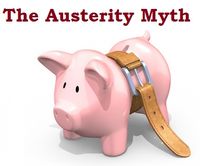
 As this is written a second European panic is taking place, one you can put alongside the one from last year. (Picture from TotallyMoney.)
But even while the markets are roiled, policymakers are learning some serious lessons:
-
Countries aren't people. There is no austerity fairy.
- Traders like action. Action is all they create.
The First Lesson
The result of last year's crisis in Europe was to do the conservative thing, namely to cut spending, to practice austerity. This is what the major countries in the European Community chose to do. It's what countries like Greece, Italy and Spain were forced to do.
The hope, with austerity, is that you'll save money by spending less. “It's just like a family,” you're told. If you take in just as much as before, and spend less, there will be savings. Economic crises are the result of being profligate, they're debt explosions. And the only way out of them is to pay your debts.
True for families. But not true for most businesses, and certainly not true for nations.
 You can understand by looking at a business such as Yellow Truck, as I did recently for Seeking Alpha. YRWC is drowning in debt, much of it taken out in the last decade. The debt was supposed to help the company grow, by taking out competitors, by acquiring market share. It didn't work.
So under a new CEO, James L. Welch, who had been with the company before, the company is trying austerity. It slashed spending on new equipment. It squeezed out every dollar of profit it could. It refused to bid on business where it couldn't make a profit. It went to its unionized workforce and threatened their pensions.
Net on net it seemed to work. The company turned a big gross profit on operations, $602 million on unexpectedly large revenue of $1.21 billion. But it wasn't enough. The debt is still overwhelming it, and it's still circling the drain. A company that sold for nearly $500/share less than a year ago is now going for less than $5. Bankruptcy looms.
When a big company does this it's tragic, but the tragedy can be dealt with in a healthy economy. Bankruptcy is horrible on the bankrupt, but it allows a fresh start. When this happens to a lot of companies, when it happens to an entire country, voters revolt. Bankruptcy, in the sense of disappearing as a functional entity, is out of the question. (See Somalia.)
Last year Greece did the equivalent of a Chapter 11 filing. It did more than cut spending to the bone, it cut off whole limbs. Did the economy recover as a result? Of course it didn't. The Greek economy is collapsing, the private economy, and thus its debt is actually going up, especially as a percentage of its GDP (which is the ratio investors look at).
This wouldn't be such a big deal – Greece is like Delaware in terms of the EC as a whole – but the whole continent went austerity mad. Voters in Spain, especially, became absolutely convinced that austerity would save them. The Socialists cut spending, and then the people threw out the Socialist government in a landslide, in favor of a conservative government that would spend even less.
The result is the present debt crisis. The government keeps cutting, the economy keeps flailing, unemployment rises, so the government cuts more.
There is no austerity fairy. Not for most companies, not for countries.
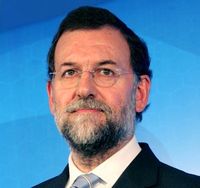 What Spain needs, what Europe needs, is what the U.S. put in place after 2008. A growth strategy. Debt doesn't matter if you have the money to pay the interest. Austerity makes most sense as a policy when times are good. Then tax revenues will rise, the need to spend will go down, and the debt will start to go down naturally.
The 1990s are one great example of that in the U.S. Ross Perot screamed bloody murder about the debt. George H.W. Bush wrung his hands about it. The Clinton Administration put in a growth program, and by the end of the decade we were actually paying down the debt.
Even the disaster of Bush the Lesser, with two wars put on the credit card and huge tax cuts given to the President's friends, can be survived. But not through austerity. It was the bailouts and the stimulus that got the economy moving again, maybe not quickly, but moving, and moving is what you want. Now that we're moving we can talk about how to pay for the wars, because there's money available to do that. And we can talk about taking back those tax cuts, because rich people are richer, and corporate balance sheets are better. We couldn't do that when things were collapsing.
So what Europe needs is liquidity, which I think it's getting, and a growth strategy, meaning the use of that liquidity to create jobs and build economies. I think it will get that, too.
The Second Lesson
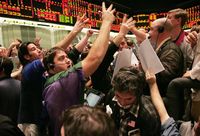 Traders love action. Traders want prices to fluctuate. Up or down doesn't matter to traders. They like it best when prices fluctuate a lot. That means there's a lot of trading, a lot of money being won and lost very quickly, and that's what traders live for.
Right now the economic game is rigged on behalf of the traders. Over the last decade we have become, essentially, a trading economy, where too many people are involved in managing the changing prices of things, and not enough people are making things.
The heart of the current recovery lies in manufacturing, in making things. High unemployment means wages are under control. The natural gas glut means input prices are under control. The Federal Reserve is assuring that anyone who wants to borrow gets nearly-free money. The United States now has the best possible environment for making stuff, and the “maker revolution,” the rise in the use of robotics to make things instead of having people do it, means there's a chance we can keep growing, even as wages and input costs come into balance with those elsewhere.
But the trading problem remains.
Traders make money in two ways.
 First, they make money on the action. The more trading, the more action. And we're not just talking commissions here. Since traders are doing their work off giant computers, their trading accounts swell with profits when trading increases, no matter what direction the price moves. The only thing that hurts traders is less trading.
Second, in every trade there's a winner and a loser. When a stock's price goes down, the shorts win. When a bond's price goes down, the shorts win. Theory tells us that markets will naturally trend toward balance, that prices are generally fair. Bunk. Prices are based on a balance of trading, a balance that traders are always trying to skew toward more trading.
Trading is essential to any market's survival. It is the essence of the market. But an unregulated market, run by people whose bias is toward ever-more trading, with ever-wider price swings, will swallow its own tail.
Solving the Mess
 There are simple ways to reduce price volatility and unnecessary trading. The easiest way is to raise margin requirements. Don't let people or companies place bets worth $10 while holding $1, or worse $30 when they hold $1. Make them put up more real cash.
The second-easiest way is to tax trading. Right now we tax trading profits at less than half the rate we tax profits derived from doing things, and we don't tax trading at all. That's insane. Money is money, income is income, trading income is no different from real income.
Finally, don't let crooks hide. That means treating “tax havens” such as the Cayman Islands as threats to global security, and closing them down.
America now has the perfect race in which to debate these issues, and to decide whether austerity and trading, or growth and making things, offers a better future for us. I'm going to love bashing Romney's political face to political death. We got the McGovern we needed.
I'm not a Europe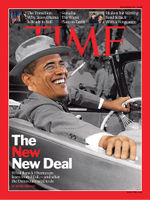 an, so I shouldn't tell Europeans how to vote. The problem is that when I look at Europeans I don't see anyone to vote for. The left demands more money go into people's pockets without having them work for it. The right demands more austerity. Neither idea is a path toward prosperity.
Liquidity, investing cash in things that can make money, is the way forward. In the 1930s Europe stumbled into this “solution” with a vast world war. They don't have to do that this time. They can spend that money in peaceful ways, to grow a more vibrant economy whose income will make today's debts easier to bear.
Europe needs its own Obama. It needs a New Deal.



Nowadays there are double dip recession has going on and on this type of situation, sustaining for life becomes so hard. May god bless on Europe. Europe is my favorite place and i never want to see it in this type of situation.
Nowadays there are double dip recession has going on and on this type of situation, sustaining for life becomes so hard. May god bless on Europe. Europe is my favorite place and i never want to see it in this type of situation.