Think of this as Volume 16, Number 26 of A-Clue.com, the online newsletter I've written since 1997. Enjoy.
 One thing tech reporters often ignore, or forget, is that most companies don't live on the bleeding edge.
It's easier to ignore now, with the consumer market dominated by gadgets that anyone can afford, but which can go from latest-and-greatest to obsolete within a year.
The business computing market isn't like that. It's much bigger, and what works tends to keep working until it becomes obsolete.
So I make it a practice to connect, once in a while, with the realities of the business computing market. And I was fortunate that Red Hat invited me to witness their annual Summit in Boston, so I could listen to their customers.
 What I learned is that, while I've been talking and writing about cloud for five years now, most enterprises have been giving it a pass. They've been more focused on virtualization, consolidating servers by using hypervisors and thus reducing costs for existing applications. And middleware, which lets you tie existing applications to virtualized resources.
The hypervisor of choice has been vSphere from VMWare, which is proprietary. Red Hat has put its money behind a competing system, KVM, and created an “Open Virtualization Alliance” with IBM to extol the virtues of its more “open” offering, but customers haven't been listening because, as I noted, they're not really focused on cloud.
 What most are focused on right now is that middleware. Red Hat's JBOSS, bought in 2006 for $350 million, still stands as the second-largest open source acquisition ever (eclipsed only by Sun's $1 billion purchase of mySQL). And,while most in the media don't know it, JBOSS is now starting to pay off for Red Hat, big time. Craig Muzilla, the company's general manager for JBOSS, was given rock star treatment at this Red Hat Summit. His “keynote,” really a glorified sales pitch, was filled past capacity, and discussions of his latest version were a big feature in the hallways. Most of the smaller sessions also seemed to involve JBOSS in one way or another.
So in the run-up to cloud Red Hat has a losing hypervisor in KVM and winning middleware in JBOSS.
So now, cloud.
Despite all the talk about private clouds, and software stacks for clouds, the dominant form of cloud remains the public cloud, and the dominant public cloud is Amazon Web Services. The AWS API is, like vSphere, a defacto industry standard. Also, proprietary.
 The reason the public cloud dominates is cost. As Bryan Che of Red Hat explained while describing his own company's new offering, public clouds are built from a clean sheet of paper. They are inherently cheaper. They use commodity hardware, they run only cloud software, and the data centers are managed so as to get the maximum computing bang for the minimum buck.
In contrast enterprise systems often use specialized hardware, specialized software, proprietary operating systems and databases, and when cloud experiments start even more expensive hardware, from EMC or HP or maybe IBM, gets rolled in on top of it to handle the “big data.”
It makes enormous sense for companies, then, to “silo” their clouds, pushing new projects to the public cloud (usually Amazon), and running internal experiments on cloud with what they have, usually vSphere.
In answer to this, Red Hat CEO Jim Whitehurst offered rhetoric.
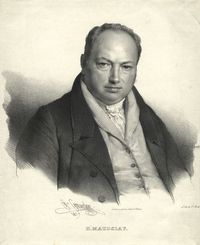 It's good rhetoric. In a repeat from a performance given last month at the Open Source Business Conference, Whitehurst talked about the autolathe, invented by a Henry Maudslay 200 years ago.
The autolathe made precision nuts and bolts possible. It came 60 years after the industrial revolution began, but the great inventions of that revolution only became possible after Maudslay's invention came into general use. Maudslay didn't seek patents on his screws, his nuts and bolts. If he'd had, Whitehurst said, he might have made more money, but the revolution would have come along much more slowly.
The cloud is the information age's autolathe. It's a machine tool, the nuts and bolts maker of a new era, and it's the products used from using what that tool makes that will deliver the real information age, starting now. Don't let that age be hemmed in by patents, by copyrights, by proprietary advantage and monopoly rents, Whitehurst said. Free the tools. Demand open source.
Whitehurst's rhetoric meant to prime the pump for what Che and Ranga Rangachari discussed with me the next day. Che calls it the hybrid open cloud. It combines three services – virtualization, cloud management, and a cloud platform – and is priced $10 per instance less than VMWare virtualization alone.
 To that Rangachari adds Red Hat Network Storage, based on an open source project called Gluster acquired last year. RHNS is software that lets you use commodity storage instead of those expensive data servers from EMC. While it doesn't scale like EMC, it doesn't cost $75,000 per box, either.
The bow around all this is open source, open standards, software produced through a meritocracy, a shared process under Red Hat's guidance. The rhetoric hides the fact that most customers aren't yet ready for the software, and that the software isn't all yet ready for true cloud work loads. Over the next year, enterprises are going to dip their toes into the cloud, Red Hat hopes, buying the rhetoric to avoid lock-in.
All very exciting. But frankly, most attendees would rather have talked about JBOSS.