Think of this as Volume 17, Number 13 of A-Clue.com, the online newsletter I've written since 1997. Enjoy.
 I have been following the copyright
wars since their inception, in 1997. I watched the passage of the
Digital Millenium Copyright Act (DMCA) in 1998, and the No Electronic
Theft Act.
Both had a similar aim, to keep people
from stealing making and re-selling copies of material subject to
copyright, now that technology allowed for clean (or nearly clean)
copies.
My sympathies here are purely with the
Electronic Frontier Foundation (EFF) and blogs like Boingboing, which
hate these laws as attacks on freedom of speech, of association, and
the free exchange of ideas.
 They note, for instance, that books go
out of circulation fairly quickly, and that millions of “orphan
works” exist that remain protected by copyright but also have no
market, and thus go unread. I agree that the public domain should be
expanded, not restricted, that copyright should not be immortal like
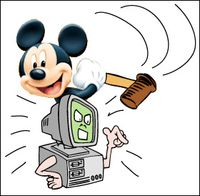
Mickey Mouse is immortal, and that “intellectual property”
rights, such as they exist, should be held by individuals, not
corporations, as the Constitution existed before the corporate era
began. I also agree that corporations should not be people under the
law, although I recently created an LLC in my own name and told my
stock broker it had made me a “Real Boy.”
All that said, it seems to me we're
entering a second phase of the Copyright Wars with the entrance of
China on the side of copyright.
 China has spent the last 35 years
catching up with the rest of the world, adopting free enterprise, and
transforming itself from a Communist state into more of a
Mandarin-directed Corporate one, in which the Party is the dominant
corporation, using its economic power to maintain civil order.
It is similar to the transformation
America went through in the 19th century, one which
accelerated after the Civil War ended the South's resistance of
manufacturing, of machines defining productivity rather than mens'
backs. If you date the end of China's internal struggle as 1978, as
many in China do, you'll find that its transformation isn't
unprecedented, as many American claim, but that it took place at
nearly the same pace, right here, in the latter part of the 19th
century.
In fact, it happened faster here.
Consider that we're now 35 years from 1978, and that by the time we
came to 35 years after the Civil War it was 1900, and the American
transformation into a corporate state was nearly complete.
While a lot of liberals will tell you
that it was the 1886 Southern Pacific decision,
which in a footnote gave corporations the rights of people under the
Constitution, that was the key point in that history, I would argue
that it was, rather, the Berne Convention of 1886, made into U.S. Law by the 1891 Copyright Act,
that matters more.
 Until Berne, America was the world's
great copyright scofflaw. Charles Dickens famously donated rights to
his satirical anti-American novel, Martin Chuzzlewitt, to the U.S. at
the end of his life, having protested throughout his life about how
the rights of authors were basically ignored in this country. Ben
Franklin didn't pay royalties in building his printing empire in the
1740s, and (as I've noted before) Samuel Slater ignored patent laws
in building his textile factory in Rhode Island a half-century later.
With all that as background, the news
is that China says it will develop a version of Ubuntu, called Ubuntu
Kylin,
as a “national operating system” for computers. I think this is
big news, because until now China has basically been getting along by
pirating Windows.
This is about control, yes, but it's
also about a new effort by China to respect copyright. Ubuntu hopes
it will get standard desktop tools of high quality, built on Kylin,
which can increase its penetration in other markets. China hopes to
use Kylin to get out of the global “copyright jail” it finds
itself in regarding computer software, and build a respectable
software sector of its own.
 The U.S. approved Berne only after it
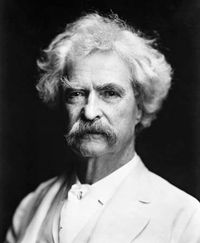
gained a positive trade in copywritten works. The novels of Mark
Twain and other 19th century authors were a tipping point
in this regard. In the case of China I think the tipping point may be
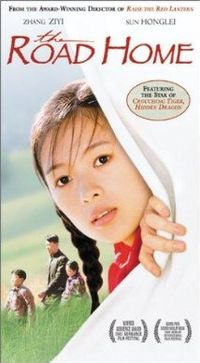
the movie industry, which has grown to some prominence despite
widespread piracy with titles like “Shaolin Soccer” and “The
Road Home” (a personal favorite). China can only capitalize on its domestic
industry, and build international prominence, by respecting
international copyrights.
It's a process, but Ubuntu Kylin
represents, I think, a tipping point in that process. What it means
is that China is going to be firmly on the side of copyright
enforcement in the future, with the interests of maintaining order on
behalf of the Communist Party as paramount in that, which will put a
very new flavor on the global international copyright struggle.
That's because the pirates are right,
on the merits. Content hoarding is just that, hoarding. Content only
lives when it's actually being used. Copyright policies that aim to
restrict the use of content through paywalls are injurious to
progress in “science and the useful arts,” they slow progress.
America's corporate state and China's Communist state are now in sync
regarding the idea of slowing progress in that way, a slowdown that
the Internet works against instinctively.
The copyright wars, in other words, are
about to get a lot more interesting.