This is one of a series of articles written by Robin Blankenhorn, a range and wildlife graduate of Texas A&M in Kingsville, Texas, concerning urban wildlife issues. Enjoy.
—
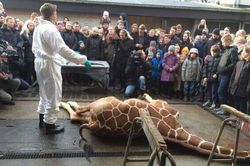 I am sure by now that you have heard about the Copenhagen Zoo. How they put down a healthy 2-year old male giraffe named Marius even when there were other options available.
Many people are now outraged. There have been death threats sent to to the zoo and even the director of the zoo. People say it was wrong to decide to end his life. They are insulted that he was then fed to lions and tigers.
I wonder if you understand the whole story. I want to defend the zoo.
 As a kid I was able to go to a camp put on by Zoo Atlanta. As a teenager I volunteered at the same zoo, helping out the campers. For most of my life I wanted to be a zookeeper and so I learned everything that I could. While my interests have changed, the knowledge has never gone away.
One thing that I learned in my time there was that there is no real easy decision. If you want to add an animal to the collection, or menagerie if you prefer, then tens of thousands, if not millions of dollars must be put aside. Most of the time, a brand new building to house the animal must be built. These buildings consist of both an indoor and outdoor enclosure. Also, sidewalks must be repaired in case they were damaged in the construction. The outdoor enclosure must be designed to replicate the environment that the animal's ancestors were from. Food, vetinary checkups, vaccines, tools, everything you will need to take care of this animal everyday, safely, must be taken into account. This can easily come to thousands or millions of dollars before you even get the animal on to the grounds.
 The next thing to remember is that any decision like this is never taken lightly. Nor are they ever made in a couple of weeks. If multiple news sites are to be believed, the Copenhagen Zoo decided to go through with this plan only a month ago. This can never be true. The zoo was thinking about some sort of end game from the moment the giraffe was born. So for two years they have been planning and thinking of something that they can do that works for everyone. Not only for the good of the species as a whole, but also for them as an entity.
That is something else to remember, as a zoo that has a member of the European Association of Zoos and Aquaria (EAZA) Copenhagen Zoo not only has to think about animals that they have, but also about the hundreds of others that are in zoos across the continent. They even are asked to think about the hundreds more that will be born in years to come. Never about just the here and now.
 In short, this decision has never been about one life or the money that could be saved, it's a decision that can affect many more species of animals that we hope our children will get the privilege to see.
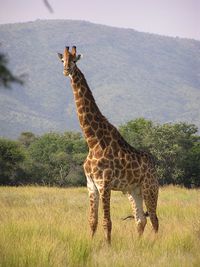
The biology of giraffes is one of the more stranger of land mammals that we have. They are large creatures, Long legs, long necks, and yet even then they are fragile. They need a lot of room, both in an outdoor enclosure during the day but also a building that can accommodate their height at night. Their legs are very powerful, and if they are able to connect correctly they can easily kill an attacking lion with one kick. But if they are ever knocked off their feet they are one of the easiest animals to kill on the Savannah. Many have called them weird or unusual.
Then you have the problem with the media. If you take the time to read more than one article, and I mean the whole article, you will see that the Copenhagen Zoo did not just kill the giraffe for fun. Nor did they just throw out the meat when they were done. They used this as a chance to educate children in the understanding of this weird species.
Did they have to have children there? No, they did not, and while some, might been traumatized by the experience, others were not. It is something that is different and later in life will be a story to tell their children and grandchildren. Even then, no one was forcing those children to watch. An adult was not standing behind a child holding their eyes open. It was a choice that each of those children made themselves.
 Then you get down to the scientific part if the equation. Everyone knows that you can have too much of a good thing. In this case Marius fit the bill. His genes were good, but there were already many other giraffes, all older, who had genes like his out in the world. There was no need for more, because what if in the next year they found that he, along with all of his siblings carried a deadly gene that could kill in days, hours, or even seconds? Would you really want to be at a zoo and have your children watch as a giraffe died right in front of them?
Ask the Germans what they think of Knut the polar bear dying the way he did, of a brain problem, in front of visitors?
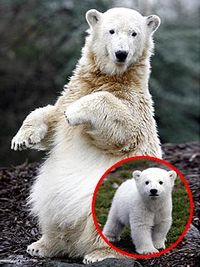 Then there is the fact that according to the BBC the zoos in Europe have actually gotten so good at breeding giraffes that they now have an overabundance of Giraffes. Even down to different sub-species. So in the end they are running out of room to house all of them.
But what about moving him to a different facility? There were two other zoos as well as a private individual who offered money to take him Marius off their hands. Why not take them up on the offer?
What would any of you say in ten years if it was found that Marius was living in appalling conditions, treated like dirt, and his offspring had been sold to a circus or even to other private owners who used them for childrens' rides? Those have to be questions that the Copenhagen Zoo thought about when looking at these offers.
No one wants any animal to die, but the public outcry would be almost as great or even greater if the giraffe were abused later. Remember the elephant calf born in Portland that was technically owned by a company that gave childrens' rides? There was even a clause that said they could force the zoo staff to take the calf from its mother before it was even two years old. So at the end of the day an unregulated, questionable, or even suspect on any level, private investor is out of the question.
So why not another zoo then?
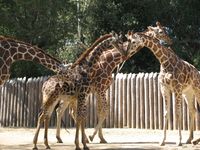
While I can not find anything of the second zoo that offered to take Marius, the first that contacted the Copenhagen Zoo had one of his older brothers in their care. That left that zoo with more things to think about than just another mouth to feed. Two male giraffes with the same or even similar genes can cause more problems than just fighting. What if Marius accidentally mated with a daughter of his brother? Simple answer, big problems.
 Then you have the problem with money. Because giraffes are large creatures, they are hard to transport safely. If you are able to transport them then they need to have a specially-built container. Fully grown they can be 16-20 feet tall. They can also injure themselves so badly that they have to be put down at the end of there journey. Then there is the fact that they might not even adjust to the new environment. Unlike how cartoons depict them, they are not easy creatures to work with.
At the end of the day the Copenhagen Zoo took all of this and more into account before naking any decision. Do you remember one of the most shocking things about what they did with his body after preforming the necropsy? They fed the meat to some of their carnivores. Specifically the lions and tiger. Do you know how much fresh meat these animals eat? A pride of ten to fifteen lions can easily polish off a fully grown adult giraffe and still might have room for more. Remember carnivores only eat meat, that is all they eat. So yes at the end of the day they did save money on fresh meat, only for the feeding of two carnivore species for one day.
In no way is it nice to boil all of this down to money, but you have to keep that in mind too. The Copenhagen Zoo is a zoo and has to look after every animal in their collection. Not just the most popular ones, or those that the public decides are more important that others.
Also keep this in mind, not everything can be solved with petitions, demands, and demonstrations. Especially when there are more factors behind every decision a zoo makes than just, do we want this animal or not.