

Think of this as Volume 18, Number 11 of the newsletter I have written weekly since March, 1997. Enjoy.
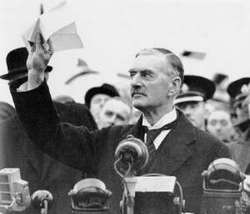 What fascinates me about historical cycles is how you don't always go back to the last one.
When I first began studying America's political cycles in 2006, I posted lots of articles about “the 1966 game.” For years I mainly compared what was happening in American politics to a bizarro version of the Nixon cycle.
More recently, I've been looking at the present crisis through the eyes of 1996. (Blame Doris Kearns Goodwin.) What most historians have been unable to explain is why people like J.P. Morgan essentially surrendered on issues like miners' wages, or why John D. Rockefeller calmly accepted the break-up of Standard Oil.
Goodwin never answers that one in “The Bully Pulpit,” but I have my own theory.
Business isn't always conservative. The word “progressive” includes the word progress, and business is inherently progressive, always pushing change with the aim of profit. Mass manufacturing, the growth of GM and Ford, would have been impossible without sure prices for inputs like electricity and for rail transport costs. What regulation did, in the end, was create that certainty. It enabled business progress.
Then, in recent weeks, we suddenly began playing The 1938 Game.
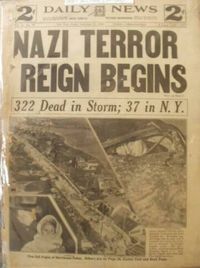 The war drums began beating, from Syria to Venezuela, from Thailand to the Ukraine. Bad people were taking power in Egypt, Africa was beset by civil strife and civil wrongs.
To some people this put the world on the edge of the abyss, and they're very anxious to push it over, because it would prove their own false choices represent the only choices for mankind. The false choices of Communism and Fascism were both on the march throughout 1938, and to many people it seemed like democracy's days were numbered, that freedom had had its day.
But that's not what happened. Democracy won the day. Freedom won the day. Liberty won the day. In 1938, the Greatest Generation had not yet begun to fight.
What comes through history first as tragedy can reappear, with the lesson learned, in the form of farce. The Civil Rights movement, climaxing 100 years after the Civil War, was comparatively peaceful. It took four years of war and millions of deaths to beat Jefferson Davis. Bull Connor was eventually laughed off the stage. This is not to denigrate the memory of the Civil Rights Era's martyrs, but in comparison with the struggle over slavery there were fewer of them.
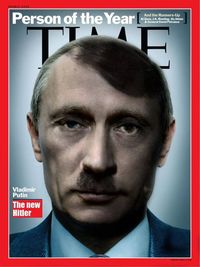 The same sort of thing, I think, is happening as this is written over Crimea and the Ukraine. We're playing The 1938 Game, but in the form of a farce. Many right-wingers are anxious for a new World War, at least a Cold War, because Vladimir Putin has taken back a peninsula Nikita Khruschev moved across an artificial border in 1954. They want to see Putin as Hitler, the President as Neville Chamberlain, because this will justify their political faith.
But this is no World War II, just as the Civil Rights struggle was no Civil War. The lesson has been learned, and the outcome this time is foreordained. Putin is going to lose. Either he takes some territory at enormous economic and social cost, or he admits to being powerless. He's not going to be able to take over all of the Ukraine, because there are 140 million Russians, 40 million Ukranians, and by his actions he's alienated most of the 40 million completely.
Russia's military is stretched, and its military budget, relative to its Gross Domestic Product, is unsustainable. It's at 4.5% of GDP and climbing, while ours is at 4.2% and falling. (China's is 2.0.) Russia has 766,000 soldiers under arms, compared with the U.S.'s 1.43 million. Ours have better weapons.
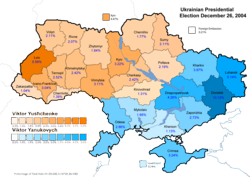 Russia can beat Ukraine in Crimea, and across eastern Ukraine. But it doesn't have the manpower to occupy Ukraine over the long term, and as it learned in Chechnya, as we learned in Iraq, occupation is not a long-term strategy. That's why it got what it could out of Georgia and now leaves the rest alone.
What the 21st century is teaching, what leaders are slowly learning, is that it's easier to get your hands on a tar baby than to get rid of it. That was the lesson of George W. Bush's wars, and Barack Obama has learned them, as have the American people. It's a lesson that will dawn on Vladimir Putin very slowly, and whether he survives it is unknown.
But he's not Hitler. And he doesn't have the capability to become Hitler. At worst, he's Mussolini.
Occupying territory against the will of the occupied is now a sucker's game.
 There are many on the right who don't want to accept this, but it's true. In an age of interconnected economies, in an age of Internet media, you can't hide brutality any more. There's a cost, always. That cost may not always be immediately apparent. You may appear to get away with it for a time. But the cost is real, it rises, and it ultimately becomes unbearable.
Putin is going to find this out. Nicolas Maduro in Venezuela is going to find this out. The Egyptian military is going to find this out. Bashar al Assad is going to find this out. Thailand is going to find this out.
It won't happen all at once. It may not even happen dramatically. But it's technology that inclines the world toward freedom, and economic progress that makes other forms of progress possible.
 Modern technology is opening up the world, and raising the price of witholding that from the masses of people. Modern economics requires having something to sell, and to get something worth selling in this world takes the willing cooperation of people. To the degree that you withhold technology from minds and hearts, your economy degrades.
Burma learned this. You can march as far back toward the stone age as you want on the backs of absolute tyranny, but in time the light goes on. And the faster technology moves forward, the faster that light turns on.
You may call this pollyanna talk if you like, but the President's hand in this Ukraine crisis is absolutely the winning hand. Putin's is absolutely the losing hand. All we need is patience. Putin will either hang himself or look for a face-saving way out.
Putin-Hitler won't be annexing the Sudetenland and annexing Poland because he doesn't have the economic strength to do it, and because he can't get it, because in order to have any money he has to sell things the West wants, and all he has to sell are natural resources, gold and oil, which are less important to the world economy by the day.
 Soft power works. Ronald Reagan talked tough with the Soviet Union, but it was soft power – the decline in the price of gold and oil during the early 1980s – that did the Soviet Union in. We have the capability of delivering just such a blow to Putin's Russia, while at the same time liberating ourselves from the stranglehold of fossil fuels, and that's what we should be doing.
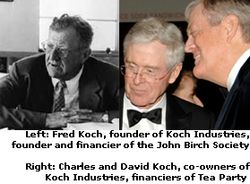
What this crisis will prove, in the end, is that it's not 1938 any more. The neocon wing of the Republican Party will be broken just as the social wing has been broken, leaving the economic royalist wing, the John Birch wing of the Koch Brothers, to face the verdict of history alone.



Hello Dana
As I rule I enjoy and learn from your thoughts on most things, but I think you are in err when you link Maduro in with a bunch of near dictators.
If you look at Venezuela honestly and a little more closely, I believe you find a lot more to respect than you indicate in this article. I did (thanks to someone I trust asking me to justify my beliefs on the subject), and was amazed to find how much I had been swayed by American groupthink.
Neither Maduro nor his government are perfect. But before you judge them, its only fair to look at what was there Pre-Chevez. Look at previous crime rates, previous poverty levels, and previous levels of wealth distributions, compared to now. The forgetting curve is steep.
Venezuela needs a lot of changes to continue to improve, but the people trying to take down his government are not looking for that. They want they’re power back.
Regards, Rick Vessell.
Hello Dana
As I rule I enjoy and learn from your thoughts on most things, but I think you are in err when you link Maduro in with a bunch of near dictators.
If you look at Venezuela honestly and a little more closely, I believe you find a lot more to respect than you indicate in this article. I did (thanks to someone I trust asking me to justify my beliefs on the subject), and was amazed to find how much I had been swayed by American groupthink.
Neither Maduro nor his government are perfect. But before you judge them, its only fair to look at what was there Pre-Chevez. Look at previous crime rates, previous poverty levels, and previous levels of wealth distributions, compared to now. The forgetting curve is steep.
Venezuela needs a lot of changes to continue to improve, but the people trying to take down his government are not looking for that. They want they’re power back.
Regards, Rick Vessell.