Think of this as Volume 18, Number 15 of the newsletter I have written weekly since March, 1997. Enjoy.
 The recent stock market correction makes for a fine half-time show on the current recovery.
Every economic cycle has these moments, when a premature end seems inevitable for one reason or another. It is often based on an incorrect assumption about what the underlying recovery is all about. In the 1990s, some people actually thought PCs and “multimedia” were driving the economy. In the last decade, people thought it was housing demand, not deficit spending on weapons.
So it is today. Cloud companies, social companies, and mobile companies are powerful, but Facebook, Google and Apple aren't why the economy is growing. These are all underlying trends that save money, they don't create growth.
Growth comes from making what didn't exist before. Clients and servers have been around a while. The Internet has been around a while. They're adjuncts, sideshows, and they're getting ahead of themselves. A correction can be a good thing.
In fact, this is an energy economy. I've said it before, but it needs to be repeated.
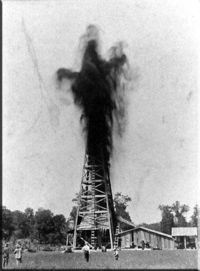 Fracking has made the U.S. energy independent for the first time in over a generation. It has brought us a natural gas glut. And it's just the lead for a host of technologies that are rapidly picking up the demand slack. Renewable technologies, first efficiency but then wind, solar, and storage. Hybrid and electric cars. Light Emitting Diodes (LEDs) instead of flourescent bulbs.
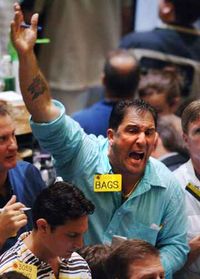
This wave is going to crest, but it has not yet crested. We know this because traders are still able to manipulate the price of oil upward, in line with the seasons. Is winter coming on? Then natural gas goes up. Is summer coming on? Then oil and gasoline rise in price.
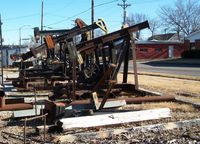
Sounds terrible, but there's a huge economic difference having this done on behalf of Arabs and Russians, or having it done on behalf of other Americans. Sure, some of those Americans are named Koch. But most are named Jones, and Smith, and even Rodriguez. If you're working on an oil rig in North Dakota or in Texas right now, you're making your retirement. If you own mineral rights in Ohio, you're building an estate. If you're in the oilfield services business, you're making money hand over fist. Same goes for your banker, and all the other people you do business with. I have relatives who've gotten a taste. It tastes good.
 This also means we have the capital to take full advantage of the opportunities efficiency brings. High prices maintain the incentive. We have the technology, and the human means with which to take advantage of that technology. The center of our economy has shifted, from office towers to university campuses, and taking advantage of this creates even more growth. Development is shifting to cities, making our centers stronger, with new types of offices and shops and housing above them.
All of which means there is more growth to come. The wave will crest only when there is enough renewable energy being produced to turn oil and gas prices decisively downward. That's the economic earthquake, and the political earthquake, that will transform the world. That's what today's economy is working toward, growth working toward its own end, when supply overtakes demand and prices tumble.
 When everyone is buying energy stocks, when everyone thinks it's an easy buck, when everyone forgets that unlimited supply can't meet limited demand at an unlimited price, that's when the bottom falls out. Not before.
The second half of the recovery starts with companies realizing that they have to increase staffing to take advantage of all this opportunity, that they can't cut themselves to prosperity anymore. The cutting stage has lasted longer than before because computer technology has, indeed, been able to replace workers. But robots won't be making the next year's breakthroughs, and those computers won't program themselves, because they can't figure out what the next set of programs should do.
 Technology can create wealth without men, but real wealth comes only when that wealth is broadly shared. This isn't an ideological point. It's a point of practical business. A strong middle class means a strong market, it creates demand for what capital produces. The machines work for the men, not the other way around, or revolution results. The current recovery might be extended if fiscal policy were put in harness alongside monetary policy, pulling out some of what the 1% make, investing that in the 99%. We will only understand that when this recovery is over, so this political change will start the next one.
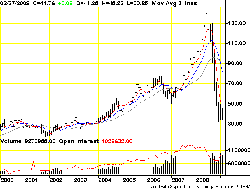
And there will certainly be a next one. We will know the end to this recovery has come when oil stocks and oil service stocks crash, when “proven reserves” start falling in value, and when expensive extraction is crowded out of the market by lower-cost suppliers pumping all they can.
There are miracles coming after that happens. Once we adjust to the new reality, we can address climate change in amazing ways. Today's labor glut will become a labor shortage. When “resources” are seen not as what is in the ground but what is in the minds of free people, then the world will truly start to change, and my generation can retire in peace.
But first, there remains this recovery, which still has some ways to go.