Think of this as Volume 18, Number 38 of the newsletter I have written weekly since March, 1997. Enjoy.
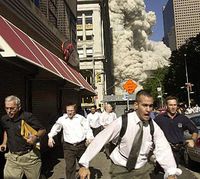 It does not always pay for leaders to speak the truth. Sometimes, when leaders speak the truth they can give the game away and in that moment lose it.
But I’m “just” a blogger. And here are two truths for our time. First, the war with ISIS is actually a war between Saudi Arabia and…Saudi Arabia. Second, the rise of Alibaba may be the greatest existential threat China’s Communist Party has yet seen.
First things first.
The Saudi kings gained power by imposing an absolutist ideology, Wahhabism, on the Gulf Arabs. They were, in their time, no different than ISIS. No one cared then because no one knew just how much oil was under their feet.
Today the world depends on Arabian oil. Oil is the global currency. But for decades many Arabs, spurred by their Wahhabist beliefs (think of it as an Arab Tea Party), have been giving financial backing to young men who would practice a purified form of the ideology on the Sunni people and, by extension, on the whole world. Reagan encouraged this practice. One result was Al Qaeda. But that practice of fomenting war against the West did not end with 9-11. That event, and the Iraq War which followed, probably encouraged many wealthy Arabs in their hatred and distrust of the West.
They doubled down. They funded ISIS.
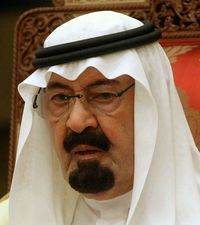
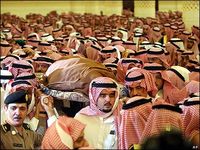 President Obama can’t say any of this out loud. To say it out loud would be to foment a civil war among the Arab people. It would harm America’s security. But the Saudi kings, and their relatives around the Gulf, who now hold the fate of the world economy in their hands, are awakening to the threat. It was a very big deal when the President, on Tuesday, said the words – Saudi Arabia, Qatar, Bahrain, the UAE – and stated that they all supported our bombing of ISIS (or ISIL, as the President still calls it because he won’t deign to call the group a State even though it holds territory) in Syria.
That statement was a very big step, a bigger step in its way than the bombing itself. It placed the Gulf States plainly on the side of the United States, and against their own creation. But it needs to be followed up, by those states. They need to stop the flow of money. They have now begun fighting the quieter, harder civil war within their countries, a war for which they will get no credit from anyone. Not their own people, not our people. They are fighting, quietly, even on the side of their sworn enemy, Iran, along with the Great Satan (that’s us), against a component of the ideology that built their power. They are fighting for their lives.
 Ultimately, Wahhabism itself must die, or rather be reformed, so that it conforms more closely to the Prophet Muhammed’s own teachings (blessings unto him). Jihad must not be taken to mean kill everyone who doesn’t kneel before you. Jihad is the internal struggle, between the good and evil within all men, the struggle that must be fought and won to create the kingdom of God on Earth. This is precisely the kind of struggle Christianity began during the Renaissance, in our 15th century, a struggle we fought out over centuries of Inquisition and religious war, between Catholic and Protestant.
History says it’s time, in other words, for the Arab World Renaissance. The President can’t state it so bluntly. I just did.
The second story may be even more important. China is the world’s most important country. It is run by a kleptocratic regime which claims the mantle of an obsolete ideology, international Communism. It is rotting from within, even while its economy continues to soar. It very much risks losing the “mantle of heaven” that has defined power there since the Chin dynasty first took power, back when my ancestors were still hunter-gatherers wandering the plains and hills of Europe and what would become the British Isles.
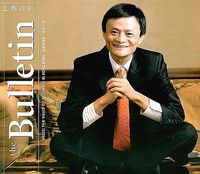 Jack Ma is a threat to that mandate. He is now worth $19 billion, over 100 billion yuan in Chinese currency. He has created hundreds of other millionaires in his wake, through the Alibaba IPO. He has created a generation of small shopkeepers in building his company, moms and pops who believe in the Horatio Alger ideal. He has captured the hearts and minds of his nation.
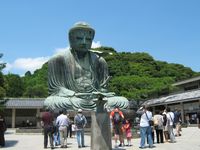
In being interviewed by CNBC last week, Ma wrapped his life story in that of the Buddha, even if he didn’t mean to. The Buddha was a successful man of the Earth, who recognized his own mortality and resolved to do good with the time remaining to him. He sat under a tree, and transformed himself. Men have been doing that ever since. It is a powerful image, as powerful in its way as that of Christ.
“I asked my wife 15 years ago, when this adventure started, whether she would rather be married to a good man or a rich man. She said a good man, because she didn’t believe I could be rich.” Ma chuckled. Asked who his hero was, he didn’t hesitate. “Forest Gump,” he said. He watches the movie whenever he feels a crisis coming upon him. He said he watched it again before he traveled to New York. “It teaches, no matter what happens, to be yourself,” he said.
 Ma’s idealism combines concepts of Thomas Jefferson and Adam Smith, and puts them in a 21st century context. What he wants to do, personally, is become China’s Bill Gates. He wants to spend the rest of his life doing good. A wealthy man seeking only to do good in the world can be an immense force for change. Buddha was.
But not all of those who have followed Ma on his Alibaba adventure are like him. They’re a diverse collection of individuals, each with their own hopes and dreams. To the Chinese Communist Party, which insists there is just one hope and one dream – the dream of a Greater China – this individualism is a threat.
Stopping the threat, of course, risks the economy. The Party requires the economy, which in the age of Ma can no longer be commanded as it was in the age of Mao, for its power. How it reacts to all this is an open question. How it reacts when the economy next enters recession – as it inevitably will someday – is an even bigger question.
Life in China is about to get very interesting. And when things get interesting in China the world shudders.