Think of this as Volume 18, Number 43 of the newsletter I have written weekly since March, 1997. Enjoy.
 Every crisis period in American history proceeds in its own way, at its own pace.
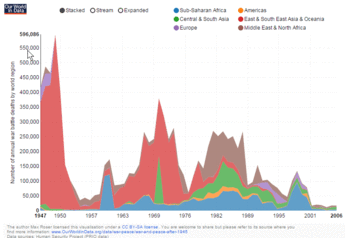
What’s remarkable about the current crisis is how relatively non-violent it has been. This has extended the period of crisis.
Yes, there have been small wars, and police killings, and random violence. But we haven’t had a Vietnam, a World War II, or a Civil War. Global prosperity is actually high and rising, with millions in Africa and Latin America leaving extreme poverty every year.
In retrospect, this means Barack Obama will be seen as one of the great Presidents.
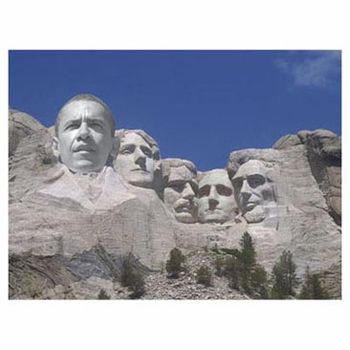 He saved the economy, he passed and implemented health care reform, and he got us out of two intractable wars, with almost no help from Congress. He has generally run an honest shop, he got New York through Sandy, and social progress has been absolutely remarkable.
But at this point in any President’s term, that’s not the way to bet. He’s been in so long that most people are tired of him. His opponents always hated him, and his friends are disappointed that he hasn’t done more. He’s stuck in the middle, getting hit by the traffic from both sides.
The only President who didn’t suffer the six-year blues was Bill Clinton, and that was only because Republicans overplayed their hand and impeached him over a blow job. All the rest who’ve made it this far stumbled in their mid-terms. Reagan did it, Eisenhower did it, Truman did it, Coolidge did it, and so did FDR.
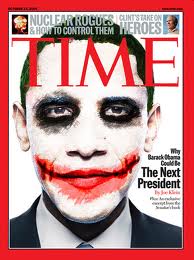 As a crisis President, someone who came to office with the promise of a change of course in the midst of terrible troubles, Obama is dependent on young votes. Young people tend to want everything right now, and they haven’t gotten it. So they’re apathetic, or downright antagonistic. They’re actually well to his left on a whole host of issues, so the Republican gains here will be temporary, but they’ll be enough to make the President’s last two years in office hellish.
That’s not entirely a bad thing.
Just as Republican Governors elected in 2010 implemented their program and will reap the whirlwind from it, so the Republican Congress to be elected Tuesday will inevitably go too far. Right in the middle of a Presidential campaign they’re bound to put sticks on their shoulders and dare the President to knock them off. Given that he won’t be running again, the President will. Given that he won’t be running again the President can finally run as far to the left as he wants, supporting whomever the Democrats choose as his successor.
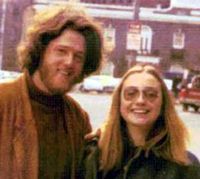 Which brings me to Hillary Clinton. I’ve been wracking my brain looking for someone to compare her to, but frankly I can’t. No political figure whose career began so early in the previous era has ever made it so far into the next one. She actually interned for the House Judiciary Committee during Watergate, and protested the Vietnam War. Her husband was the President who said yeah-but to Nixonism, just as Eisenhower said it to the New Deal. Now she’s going to be asked to validate a new set of assumptions, the Obama Thesis of Consensus.
What the times demand, then, is a Grant to Obama’s Lincoln, a Teddy Roosevelt to his McKinley, a Truman to his Roosevelt, or a Reagan to his Nixon. That’s not Hillary Clinton. She’s a yeah-but facing a wind blowing in the opposite direction. It’s Obama who has been the Reagan figure, Clinton the Nixon one.
And the Democratic bench seems devoid of Reagans. There are solid administrators and effective Congresscritters there. But there’s no charisma. Maybe if she put someone like Julian Castro, now secretary of Housing and Urban Development, on her ticket, then died of a heart attack…but I wouldn’t wish that on anybody.
The field seems cleared for her, and the electorate is not yet ready to go for a Republican because the party keeps spinning further-right like a wayward satellite and is due to become, if anything, even less popular in the next year than it is now.
What would happen if something happened to Hillary between now and Election Day 2016? If her doctor gave her some bad news, or she just realized how tiring 69 can be? I think in that case she’d be in position to find another leader, a younger leader, and if the realization came early rather than late that leader could do great things.
Whoever is elected in 2016 is probably going to face a severe recession, caused by (of all things) energy abundance. The current market is foreshadowing. A 20% fall in oil prices caused a 10% correction in the market, but that’s re-adjusting as we realize the glut is temporary. Renewables represent just 2% of the grid, but effective storage could cause that to jump by 2017 to as much as 10% — wind energy is presently being refused entry to the grid when the wind blows too hard. There are breakthroughs happening every day in solar energy, hard costs keep declining and there is ample room to drop “soft costs” – the 80% of a solar installation’s costs consisting of permitting, fittings, and installation that keep our solar prices at twice the level those in Germany. And demand for energy isn’t increasing. Thanks to efficiency it’s declining.
 At some point, probably three years from now, a permanent tipping point will be reached in the developed world as it already has been reached in the developing one. Solar and wind energy will become cheaper than the lifting, refining and delivery cost of oil – which is close to today’s price. There will be a rush to invest in renewables, a rush away from fossil fuels, and the whole world will turn upside down. Newspapers will call it a crisis but it will, in fact, be the biggest opportunity for growth the world has ever seen.
Who do you want riding that train – someone who sees the opportunity or someone who sees it as a danger? It’s an event that a true consensus could be reached on, a consensus that will rule our politics for 30 years or more, if the opportunity is seized.
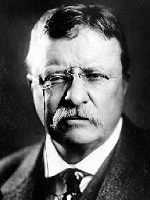
Who will seize it? In our past political life Ulysses S. Grant seized such an opportunity on behalf of Wall Street, Theodore Roosevelt seized one on behalf of Main Street. Harry Truman seized one on behalf of Detroit and Ronald Reagan seized one on behalf of California.
I don’t know the answer to that question. Can Hillary Clinton do it? Can someone else?