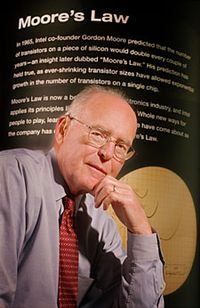
 Donald Trump is not going to become President.
America has not surrendered to tyrants, or would-be tyrants, for 225 years. We are not about to start now. There aren’t enough angry white men in the world to elect him.
The question is what happens to the anger that he generated? We have several examples of that in American history, and none should leave you sanguine.
The most peaceful outcome was what happened in the last turn of the cycle, from manufacturing to oil. War in the 1970s became our chief economic export, but it was at least kept far away. The domestic objections, the anti-war crowd, generally left politics after 1972, gradually accepting their role in opposition, suffering the “hippie punching” that distinguished our politics right until the next crisis, in 2008.
World War II followed the 1932 crisis, beginning first in China, then erupting in Spain, before engulfing the world. World War I came in the wake of the 1896 crisis, preceded by a decade of American imperialism, while Filipinos died, Columbians saw their country broken, and Theodore Roosevelt became the first great avatar of American imperialism.
Also, the Civil War, which began right after the 1860 election.
 From this it’s plain to see that we’re not out of the woods when Trumpism is defeated at the ballot box. Violent challenges to the new tech economy will continue, even accelerate, and many will happen right here in the USA.
Thank Antonin Scalia for that.
When Ted Cruz talks about our being “one Supreme Court nomination away from losing the Second Amendment,” he’s not lying. Scalia’s decision in DC vs. Heller, in 2008 , which held for the first time that there was any right to personal ownership of even a handgun, was a 5-4 decision. If Merrick Garland, or some replacement, decides this was wrongly decided, that United States vs. Miller in 1939 should hold instead, then the “individual right” to a gun falls, and government becomes free to protect the people.
This doesn’t mean the threat of violence will disappear in a puff of patchouli smoke. I fully expect some parts of Appalachia, and of the West, to become “no-go” zones for people from TechLand, at least for a time. I hear banjo music. I expect terrorist cells to go after people like Marc Benioff, who have supported the human rights agenda. There will be lots of new jobs in law enforcement and protective services. Some cells will take military action to disperse.
But America is going to win because TechLand has something really important going for it.
Hunger.
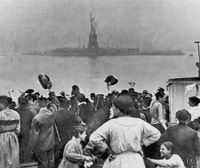 Hunger is a natural characteristic of youth. When we’re young, we’re hungry, and we have the energy to go after what we want. Every entrepreneur was once a hungry young kid, dismissed for being geeky, or curious, or different in some other way. The desire to “show them” built Apple, it built Microsoft, it built IBM, and it will continue to build vast new enterprises.
Real hunger is the Moore’s Law of youth. America was built by immigrants. Immigrants are naturally hungry. Immigrants will do the jobs others won’t, for whatever is offered, and they will hoard that money, selling the energy of today for a better tomorrow, if not for themselves than for their kids.
This has been the American story, and it is our story still. It is the Trumpistani demand to close the borders that is most dangerous to our economic future. Without immigrants we’d be falling off a demographic cliff. We would be Japan, or China.
 Meanwhile, there is a country to be won. And the only way to win that country back to moderation is by finding new jobs for the lost, or for their children, to do. There are lots of jobs for STEM graduates. The question is what will happen to the middlemen, whose skills lay in making decisions that computers can make better and faster? What about their kids? What will happen to the teachers and university professors, when it’s their turn to face the fire? What about the truck drivers? Their turn is coming soon.
This is the challenge TechLand faces, and it’s one they won’t face, directly, until they are forced to by politics. When their positions are threatened, when the barbarians approach the gates, tech leaders will face a need to develop business models, funding sources, and service needs that millions of people can turn into jobs and careers.
I see new needs being filled all the time, although there still seems a shortage of cash and capital to fill them completely. Dog walkers, personal trainers, yoga teachers, the whole artisanal food movement, environmentalists, life coaches and personal care workers will all be needed, in the millions. And we need to pay enough for these services that native-born Americans, not just immigrants, will want these jobs.
 My daughter, for instance, has learned a lot about urban ecology, about the wild animals moving to the city, about urban design, about the problems of adapting our cities to the natural world around them. What she needs is a business model that will justify her working in this area. Will her job be with a non-profit, with a government agency, or perhaps a business that needs to adapt its own campus to the new urban reality? Whatever it is, she’s ready for tomorrow, but tomorrow needs to come for her.
Beyond the politics of the moment, in short, there lie enormous economic challenges that both the private and public sector will have to work on, together. There is work that needs to be done. We need a general consensus concerning the demands, and a willingness to work together and find solutions. That’s what the Obama Thesis of Consensus is about. It is about adapting the country to tech leadership, to Moore’s Law, and to the economic challenges that follow in its wake.
Those who follow Trump and who continue to follow the Nixon Thesis of Conflict have chosen to be outside the consensus. They must be brought in, or they can choose to live outside it, within or without the law. The important point to recognize, right now, is that a path toward the Obama Thesis of Consensus succeeding is clear. The politics of today supports its being accomplished, but change is never easy.
It always comes with casualties.