 Only old reporters and historians now remember the Sagebrush Rebellion, which may have been more decisive in setting our current political course than any other event of the late 1970s.
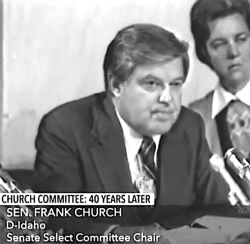
The Sagebrush Rebellion was a rural revolt on behalf of private property, against the government that still controls most of the land. Before it got going the West was represented by people like Frank Church in Idaho, a liberal firebrand whose name lives today in a 1973 amendment against the Vietnam War. Mike Mansfield, a Montana Democrat, was the Senate Majority Leader in the 1970s, and even Alaska was represented by Democrat Mike Gravel.
Today, the only Democrats in the Intermountain West and High Plains are “yeah-but” Democrats, people like Heidi Heitkamp of North Dakota, who generally agrees with the principles of the rebellion but argues that, sometimes, like in her election, the Republican is just a little too radical for local tastes.
The modern equivalent of the Sagebrush Rebellion is health care. Democrats use the shorthand Medicare for All.
 While the Sagebrush Rebellion was a rural effort on the part of private interests, Medicare for All is a suburban revolt on behalf of public interests. The launch of Obamacare in 2010 was an effort at compromise, at meeting the demands of industry for private control of the system and of the public for cost control and universal service. Its rejection by Republicans, climaxed by the Trump Administration’s actions to destroy the law since 2017, and to destroy all publicly-financed health care, have set the present struggle into motion.
Love it or hate it, America has the most inefficient health care system in the world. We spend 18% of our gross domestic product on health care, but only manage to serve a portion of our people, and not all that well. In contrast Canada, which has a public health care system, manages to cover everyone on 12% of GDP. American life expectancies are close to those of Cuba, and with the opioid crisis could be heading down.
 I got a taste of what Canada has a few years ago, when my darling wife dislocated her shoulder (my fault) while vacationing in Nova Scotia. I rushed her to a local hospital, which was forced to charge me “full price” for her care, but that bill came to under $1,000. Here in the states, the copays would have been higher. During her treatment my wife was given two shots of powerful drugs, the full attention of two doctors and an entire nursing staff. “You’re the excitement today” one said. Indeed, we were.
What made the difference? There was less paperwork. The appropriate resources were available, in the right quantity, and no more. The drugs were not overpriced. The doctors were not overpaid. The hospital was a small building, without an opulent entrance. Everyone was focused on the mission, and money was secondary.
Medicare has something in common with this, but the American system Canada has the most in common with is that of the Veterans Administration. The VA is a true single-payer system. It is completely mission oriented. It gets the best prices on drugs and equipment. Its facilities are not fancy. Yet Veterans get more care, for less money, than any other group in our society.
In fact, the older, sicker and poorer you are in America, the further health care dollars go. VA care is cheapest, followed by Medicare and Medicaid. The private insurance system costs most of all.
 Private employers are sick of this rip-off, which is why Amazon, JPMorgan Chase and Berkshire Hathaway are trying to build an alternative for their roughly 1.2 million employees and their families. Technology, centralized purchasing, direct control of facilities and doctors, can all help hold down the costs of care.
Insurers know this, and since the advent of Obamacare have been slowly moving toward a more vertically integrated model. That’s why CVS is buying Aetna. That’s how Centene makes money serving Medicare and Medicaid patients. It means less choice for patients, but you can make sure clinics use best practices, doctors prescribe the most cost-efficient drugs, and salaries are kept in line. Yes, doctors are going on salary.
What Democrats are going to do over the next two months is not “scream that Republicans are about to take away your health care,” as one idiot wrote recently, but demonstrate, through anecdote and statistics, how this has already happened. Trump’s “low cost” insurance is non-insurance, and people who are dying today can describe just how that feels. Trump’s raising of Obamacare prices, his destruction of the individual market, can be demonstrated, by people at kitchen tables looking at their bills. The Congress’ decision to cut Medicare, the Republican governors’ refusal to accept Medicaid and (worse) the ongoing efforts to destroy the VA through privatization and budget cuts can all be brought, easily, into human focus, through story-telling.
 Medicare for All would not kill the private health market. Centene demonstrates that. When you’re on Medicare, you still go to private doctors and private hospitals, and insurance is still necessary to “fill the gaps” on care. You can adopt this by allowing people to “buy in” to the system, and if they’re coming in at the price people my age have established as a cost basis, it’s almost certain to be profitable for the companies getting the contracts.
Centralized purchasing, centrally-owned facilities and centralized billing systems can start the process of cost control Amazon has embarked upon. Medicare for All may be the only way to prevent an Amazon takeover of health care. America’s biggest businesses, including the Cloud Czars, are going to endorse this change. They know what data can do, and they’re anxious to do it. They’ve already agreed to adopt common standards for moving medical data around, an important first step.
Washington pundits and analysts are always behind the curve. They didn’t see the Sagebrush Rebellion coming, they didn’t see Trump coming, they don’t see this coming.
It’s not just a blue wave. It’s a policy tsunami, a complete reorganization of over one-sixth of the economy.
It’s coming.