 To survive, cities need to be majority middle-class, even upper middle-class.
Why? Cities cost more to maintain than suburbs. There’s more infrastructure. It’s older.
This means cities need to be attractive to upper middle-class people. That means they must be livable and walkable. If you’re going to increase density, you also must increase parkland. Not just one or two parks on the city margins. You need medium size parks, small parks, and vest pocket parks everywhere. You also need trees. Lots of trees. Anywhere a tree will fit.
This doesn’t mean you limit density. But if you’re going to have block-after-block of four-story buildings you’re going to need some parks within walking distance. Otherwise, you’re building a slum.
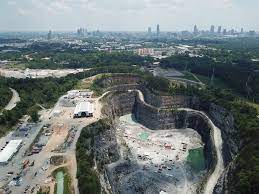 Developers never talk about that. They look at today’s opportunity to build and, once it’s sold, they go on to the next. They don’t take livability into account unless they’re forced to. They will do anything to keep from being forced to. Taking livability into account defeats the purpose of “workforce housing.” A developer is happy to surround a single-family house with four-story buildings, blocking out the sun, turning the neighborhood into a heat sink, and leaving the slum after the market turns around. No slum looks like a slum when it’s before a planning department.
Politicians who call anyone who opposes rampant development “racist” are doing the racists’ work. Racists would be happy to see the poor locked inside the center city, living in “workforce housing” while the local median income falls to the poverty line.
Workforce housing should be located where jobs are, not where it’s politically convenient. While the center is building “workforce housing,” developers will be living 30 miles away and zoning it out. That’s what Atlanta was like in the 1980s, when I moved here. State politicians turned the blue to red by running against the “donut hole,” supporting white, low-density suburbs over people in the black inner city.
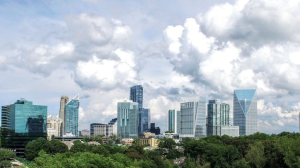 They’re doing it again, and Atlanta politicians are going along. They’ll recreate the donut hole if they can control it, claiming the doughnut is racist. They’re even happy to let neighborhoods like Buckhead incorporate separately, if it means they don’t have to share power in the center.
If we’re going to have dense urban development, we must do it right. It needs to be diverse, not just ethnically, culturally, and in terms of income, but also in terms of land use. Commercial and office uses must be interspersed with residential. Homes are offices, and we need somewhere to go for lunch. NIMBYs won’t like to hear it, but lifestyles are changing, and their children will support this.
At the same time, we also need parks, we need trees, and we need a built environment that will remain attractive to people with money years from now, when the easy money runs out.
That’s not what I’m hearing from politicians or the development community. If this story gets coverage, I’m going to get called a NIMBY, and a racist, for writing it. I’m neither.
But if Atlanta does go ahead with its plans call me gone. Call the rest of upper middle-class Atlanta gone. You can also call most of those who leave, forced out of the center by high taxes, high crime and short-term urban planning, Republicans. That’s what you’ll have made them.