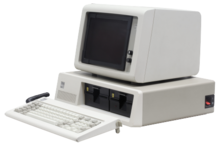
 I once spent a half-year working on a manual for an online shopping service.
Unfortunately, the year was 1984.
The point is that while it’s easy to ridicule the metaverse, the enabling technology already exists. The vision is easy to express.
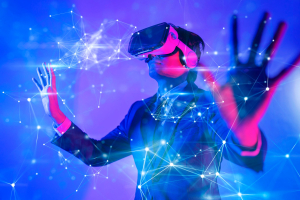
When Mark Zuckerberg thinks of the metaverse, he first sees the oculus headset and haptic gloves he’s been developing for nearly a decade. The former can deliver an artificial, or partly artificial, set of visual and auditory inputs. The latter can deliver other senses, like touch, taste, and smell, simply by assigning values to them and transmitting the values, while having the necessary client equipment on-hand to translate the values back into experience.
 You can see the beginnings of all this in events like the Van Gogh exhibits. But these are as primitive, in their way, as the Lumiere Brothers’ films were in the 1890s. You can next make them portable, overlaying a past scene on the present as part of an historical walking tour. You can make them completely artificial, as in video games made with the Unreal Engine. Or you can put an artificial background on a real foreground for a car ad or film, using LED screens.
Currently, these applications require very specialized, even expensive, client hardware. But the Apple Macintosh seemed expensive in 1984. And there’s low-hanging fruit in making hybrid work look-and-feel more like everyone is in an office. We laugh at how primitive it looks today but knowing who’s in-and-out for the kind of ad-hoc meetings you’d find in a real office would be huge for at-home workforces.
 What Zuckerberg is announcing with Meta Platforms is his intent to develop standard software tools for moving these high-end signals around, at scale, turning today’s AR and VR experiments into networking standards. He knows from history that owning the bottom of the stack, the operating system, gives a company control over everything above it. That’s what Microsoft was built on. That’s where Apple got its juice.
But there’s no guarantee that Zuckerberg will win this race. No one could have foreseen in 1984 that today’s Internet would see AT&T and IBM as fringe players. Allen Steele could see the destination of privatized space flight in his Near Space novels, just not that Elon Murk and Jeff Bezos would achieve it. William Gibson could imagine cyberspace, but it took decades to build it.
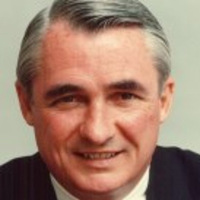
Just because you see the destination doesn’t mean you’ll be the one to get there. If that were the case I’d be a billionaire. And John Akers (right) would be a business legend.