 In some ways liberals are the most conservative of people. We seek to protect things that aren’t worthy of protection.
Like newspapers.
The First Amendment makes no mention of newspapers, just as it makes no mention of TV, radio, or the Internet. They didn’t exist in 1789. It refers to freedom “of the press.”
This means whoever owns a printing press can print what they want, free of government restraint, if they’re willing to take responsibility for it in court.
What was called a “journalism profession” at Northwestern’s Medill School in 1977-78 is a product of 19th century technology. The rotary press made it possible to print thousands of copies at once. The linotype let print be set as fast as a man could type. It was in the chase for the latter that Mark Twain lost his fortune.
Before these inventions, newspapers were the product of publishers who got in to push their personal causes. There were political papers of all stripes, ethnic newspapers, and newspapers in foreign languages. None were aimed at the whole market because the technology to serve it didn’t exist.
Joseph Pulitzer changed that. He aimed to serve the whole market, because he could, and hired writers whose stories would appeal to the masses. But he was also a Democrat, much as Joseph Medill was a Republican. You don’t apply to join The New York World to write nice stuff about Roscoe Conkling . You don’t apply to the Chicago Tribune thinking you will do editorials on what a great guy Adlai Stevenson is. The owner is the company line.
Journalism is a Myth
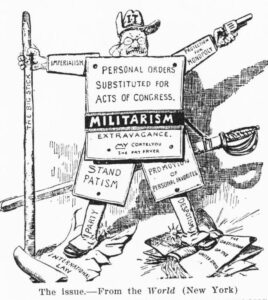 The whole myth of writers or editors with real power emerged from the desire of publishers to have a ready work force. What power editors had always depended on the willingness of the owner to support them. Aggrieved rich men or politicians could always get a hearing from the owner, even if they didn’t always get what they wanted. And the model of the rich man’s press never dieed, either. Harry Chandler ruled California for decades from the Los Angeles Times.
The Internet destroyed the business model of Pulitzer and Medill, without leaving anything in its place. In response rich men bought what was left and returned to the overtly political business model that dominated in the first century after the U.S. was founded.
What should liberals do? Stop whining and build your own media. Get some rich dudes (they’re out there) to invest in sites that will tell the truth, free to read, and worry about your business model after.
Freedom of the press, in the end, means freedom to be the press, if you have the wherewithal and determination to be it.