 I am still rewriting the Moore’s Law book I first published 20 years ago.
It’s a complete overhaul of what I published in 2021. It even has a new title, Huang’s Law.
The section that has given me the most trouble involves the people benefiting the most from technology.
I really believed, until recently, that most tech wealth understood the gating factor to growth is human capital. It’s not financial capital, as in the oil age, nor organized labor, as in the manufacturing era. And it’s certainly not forced labor, as in the cotton age.
It’s human ingenuity. Trained, empowered, free minds, working together, are what make money today. To get that you need the infrastructure of education, the comfort of high salaries, and the freedom for people to pursue their passions.
America is winning today because it offers all of this.
America also offers a certain amount of hunger our rivals don’t have. It’s here because we know talent can come from anywhere. Raising people up, as Jensen Huang and Satya Nadella were raised up, is makes America truly great.
The first generation of tech wealth, my generation, the generation of Steve Jobs and Bill Gates, understood all this.
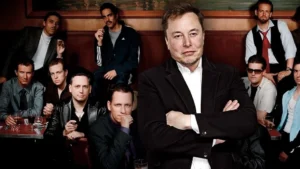
But the rise of the Cloud brought a new generation to wealth. It started with the PayPal Mafia, and has only gotten worse.
Rich, Entitled Useless People
 Most of what the PayPal Mafia, and Techbros like them, created in the 2010s has proven to be useless.
Instead of creating new value, companies like Uber and AirBnB arbitraged the protections that labor, capital, and consumers had constructed over a century, under the hand of government, and killed them.
The Gig Economy was sold as entrepreneurship. It was, and is, another form of low-wage slavery.
People like David Sacks, Peter Thiel, Marc Andreessen, Chamath Palihapitiya, and Elon Musk have abandoned the infrastructure that built their wealth for cheap tax breaks and a license to kill the environment. They condemn those who built the infrastructure, ignore the homeless left behind, and demand the right to rule over the rest of us like Gods. They refuse to recycle their wealth, moving to states that promise them immunity from wealth’s obligations, the same states now drowning from climate change.
It’s not a coincidence.
Rich men who want to be kings won’t be satisfied until they rule everything.
The Real Threat of AI
 It’s when we get to Artificial Intelligence (AI) that this all gets scary.
The excitement over ChatGPT led to a rush of investment in Nvidia data centers and an expectation we were on the cusp of Artificial General Intelligence (AGI).
The idea was that at some point Real Soon Now you wouldn’t need writers, programmers, or managers of any kind. The dream of the Techbros was that they could live on a cloud of money and leave everyone else behind.
It wasn’t true.
Generative AI is a tool, just like database computing. It collects a lot of old data and outputs it in a variety of different ways, in response to natural language prompts.
That’s not intelligence. That’s filing.
But nearly $1 trillion may now be invested based on a false premise, the idea that you can take people out of the tech equation entirely, leaving it only to the Techbros who have broken society for their own benefit.
It’s finally clear to me these people must be controlled just as much as those who made their money in every other way, throughout our history. They won’t recycle the wealth they extract unless they’re made to.
It’s for their own good.
Running Wild
 History tells me what happens when you let rich people run wild. They destroy their world.
The 1920s were a boom time, led by men similar to today’s Techbros, who refused to reinvest their wealth and had contempt for those who weren’t wealthy.
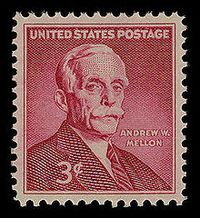
Henry Ford was their avatar, but my favorite is Andrew Mellon, the banker and Treasury Secretary of the 1920s. (Naturally his grandson Timothy loves him some Trump.) This is what Mellon said to Herbert Hoover when asked what to do about the Great Depression:
“Liquidate labor, liquidate stocks, liquidate farmers, liquidate real estate. It will purge the rottenness out of the system. High costs of living and high living will come down. People will work harder, live a more moral life. Values will be adjusted, and enterprising people will pick up the wrecks from less competent people.”
Rather than focus on the morality, observe what happened next. The period from 1929-1954 is often called the “great leveling,” a dramatic reduction of inequality caused by the wealthy losing their money to the depression and war their hard-heartedness inspired.
Extreme wealth creates its own form of dementia.
 There’s an earlier example in Erik Larsen’s recent book, The Demon of Unrest. By 1860 slavery had made southern planters far wealthier than any New York bankers. They believed themselves to be better than other people. (J.H. Hammond (left) screwed his slaves to make more, and even abused his own nieces, yet was Senator from South Carolina in 1860.)
This wealth was completely broken by the Civil War. Read the book. These monsters deserved it.
If tech wealth isn’t recycled into the infrastructure our next generation needs to create new wealth, then today’s Techbros will reap the whirlwind, and our children will reap it with them.