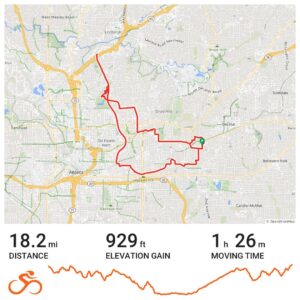
 I took one last spin through my hometown this weekend, before my coming trip to the Netherlands.
I learned a lot.
None of it was good.
First, about Atlanta’s roadways.
They’re in horrible condition, because we insist on hauling everything we have, wherever we go. SUVs, each with a single driver heading to work. Giant pick-ups up hauling trailers, for currying postage stamp lawns. Giant 18-wheelers, bringing flour and canned tomatoes to a half dozen restaurants. UPS and FedEx trucks, carrying a week’s packages, delivering a fraction of them.
Weight causes potholes. Over months, over years, each oversized car or truck has an effect. The roadbed deteriorates, and the asphalt comes apart. It’s civil engineering.
Then there are our utilities, all buried underneath that roadway. Water pipes installed a century ago crack and break. Electric and phone lines come down off poles in a storm. Enormous cherry pickers are dispatched to put them back, then sent out again to cut the canopy and protect the lines from branches. The asphalt patches meant to hide the damage are uneven, and the roadbed below them is never repaired.
If fighting this to get uptown isn’t enough, cars hate bikes. Not all of them, but enough to matter. They blow right past my head, or zoom into another lane, in the face of oncoming traffic. At corners, they push themselves into the curb, so they don’t have to share “their space” with me. This is just as well, because they might suddenly decide to make a right on red, maybe at the corner, from the left lane.
All drivers think they have a god given right to speed along at 35 mph on two-lane roads, at 60 on four lanes. This is the city in 2025.
I’m Too Fast for You
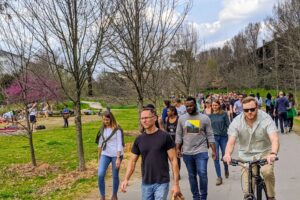 I saw all these things as I ambled toward Piedmont Park and the recent extension to the Atlanta Beltline.
My ride was just getting started.
Heading back and forth from 10th Street, toward the dead end called Armour Yards, was uneventful. True, the path is slowly being filled, the way birds find a newly renovated garden. It would be worse, except for some reason the owners of Ansley Park Mall have rejected the Beltline, putting up high fences against it. Maybe they think some cyclist is going to rob the Kroger.
I may complain but it was glorious until I crossed Monroe Drive at 10th Street, heading south. I was too slow for the traffic going uptown, but now I was too fast for it.
I really wish I’d worn my GoPro. But let me try to paint a picture. There were hundreds, no, thousands of people, mostly on foot, who would stop suddenly, or head across the trail to grab a coffee or to meet a friend. There were kids on toy trikes and scooters with no concept of a “side” to the trail, their parents oblivious. There were dogs. Their average speed was 2 mph. My bike wanted to go at 10. I averaged 5.
Add to this, heading upstream, were Class 3 e-bikes with teens trying to reach 28 mph, like those jerks on the freeway weaving in and out of traffic at 100.
When I finally reached the Krog Street Tunnel, where I could find some dark unimproved cement and asphalt, I was exhausted. I wound the motor up on Wylie Street and headed home.
The Solutions
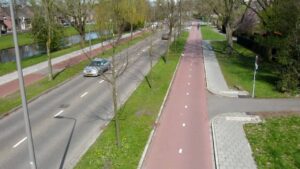 Atlanta is far less crowded than any Dutch city. Much more of the ground is paved. It only seems more crowded because it’s disorganized.
We can solve the problem with enforceable speed limits and segregation.
Once you’re in the city, on a two-lane road, whether commercial or residential, it’s impractical to go faster than 20 mph. That should be our city speed limit, except on four lanes. An e-bike, or a Spandex biker, can easily hold that speed. They’re not in the way.
Second, the Beltline can’t be just one thing. We must segregate bike traffic from foot traffic. This is what the Dutch do. A walker doesn’t leave the “stoep” for the “fietspad” except to cross it, and then they treat it like a Mexican mama crossing Buford Highway from the bodega to her apartment, her children holding her hands.
These policies must be enforceable to mean anything. Any so-called “e-bike” that goes over 20 isn’t an e-bike, no matter what its manufacturer claims. It’s a moped, it’s a motorcycle. It must be licensed, and so must the rider.
The Fight
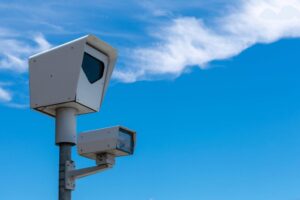 The Georgia legislature is about to ban speed cameras for the second time, and that must not only be reversed, but it must become universal. The state should buy the equipment, cities should manage it, and courts should oversee it. This crap about it being a cash grab by greedy governments is just an excuse to run over kids.
This is a program that will take 10 years to implement, if we start now. There’s going to be growing pressure to make it happen, because more e-bikes are being sold every day. People want to live in a city, without spending $12,000 a year to have a private car and risk their lives on the freeway. The market will, in time, scale our loads, with self-driving cars and trucks, and mini warehouses delivering goods for bike trucks to take the last mile.
We can have a dense, beautiful, livable city. What we need to do is demand it. Now it’s off to the Netherlands to learn more. Because their past is our present. Their present is our future.